
You didn't lose your taste.
Nothing about the changes in your body changed what you like. I plan houses that are beautiful and still work on a bad day, and I'll tell you which of those two a decision is costing you.
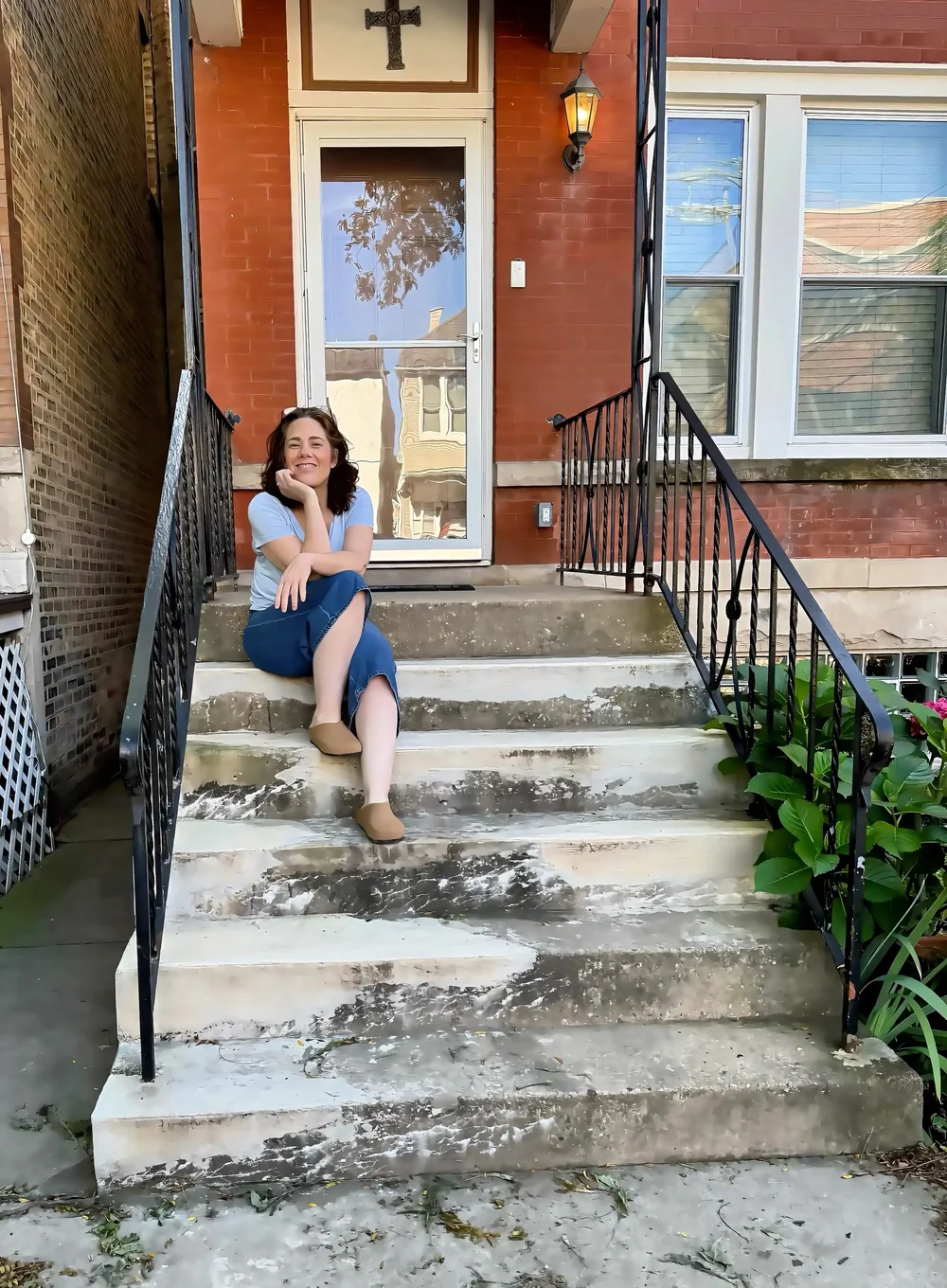
Design can't make a body cooperate. What it decides is how much that body costs you.
You plan the day around one flight of stairs.
You've stopped using the upstairs bathroom. It didn't announce itself. It just stopped.
Somebody has to be in the house when you shower.
You know exactly which rooms you've quietly stopped going into.
Then you go looking for what's supposed to fix all this. Beige plastic. Institutional white. A bar that would make the room look like it came with a schedule and a call button, right there every morning, in a bathroom you chose.
The pain's coming either way. The ugly part isn't. I'd rather hurt in a beautiful room, using gorgeous things I picked myself.
Most people start with the object. I start with the room.
The grab bar is the last decision, not the first.
Where the door swings. How far you travel to reach a thing. What you pass on the way.
How much turning space the room gives you, and where you set something down when both hands are busy.
Where the light is, and whether the switch is anywhere near where you need it.
Clearance is the cheap part. Getting it wrong is what costs.
Beautiful and functional were never a trade-off. When a decision makes them one, I'll say so out loud.
The one exception
A stair lift is the hardest thing in this category to love. The better ones are genuinely better than the rest, and if you need one, put it in. Don't lose six months waiting for a version you'd have chosen on looks alone.
The ramp at your front door is a different case. You do not need a zinc-plated industrial switchback to get inside. That one can be built from the same materials as the rest of the house.
What almost all stair lifts are sold on is the promise that you'll barely notice it's there. That's not a standard I design to anywhere else in a house and I'm not going to start here.
You go from looking up to them to worrying about them.
It's hard to watch someone who raised you, who shaped who you are, start to lose physical capability.
I went through it with my grandmother. I would have done anything for her, because she loved me unconditionally. What I wanted was that no matter what stage she was in, her life could still be lived with dignity.
So if your parent is the one who needs this, you can bring it to them. I'll want them in the room, because it's their house and they are the one who has to live with what we decide, and material that plans somebody's house around them without them is a worse product and a worse thing.
Three sessions, and not one of them is a form.
1. An hour on your building. Send a plan and some photos first if you have them, and if you don't, we work from the conversation. There's nothing to fill in alone beforehand. I'd rather ask the questions myself, because you don't know yet what's going to matter and I do.
2. Forty minutes, once I've done the work. What's nearly free right now, what can wait five years, and what to stop paying for. A written page follows within a week, so you're not relying on what you remember from an hour on video.
3. Twenty minutes, after you've met a contractor. That's when the real questions turn up. Somebody quoted you, or somebody said something that didn't sit right. It's there whenever that happens, with no expiry on it, and I won't chase you for it.
Nothing here asks you to be organized. Send what you have.
Two ways in, and all of the prices.
The consultation · $1,197
Three sessions with me, spaced across your project rather than used up in a week. A written page you can hand to your contractor. And the course, included.
- Session one, sixty minutes. The intake, live or by worksheet. No homework, and nothing to prepare.
- Session two, forty minutes. The recommendations, once I've worked through everything. The written page follows within a week.
- Session three, twenty minutes. Yours after you've met a contractor, whenever that turns out to be. No expiry, and I won't chase you for it.
If an architect has already drawn something, tell me when you book and session two becomes that drawing instead. Same price.
The course · $297
Nine modules, eight to twelve minutes each, under three hours. What has to be decided before the drywall goes up, what can wait five years, and what to ask the people you're paying. Pre-recorded, no start date, yours to keep.
It's included in every consultation. It isn't finished yet, so it isn't for sale on its own, and everyone who books before it ships gets it free on the day it goes out.
Booking is Tuesday through Thursday mornings, two slots a day. Payment before booking. If you get to the end of session two and the written page and I haven't told you anything you couldn't have worked out on your own, say so within a week and I'll refund you.
What makes me qualified to hand you these questions?
I've done this before. We took our last house through an extensive renovation, and I know what it costs to get a decision wrong because I have paid for it, including the ones that went badly.
Now I'm doing it again, in a classic Chicago two-flat, in public at paulinastop.com. I'm at the same point you're at. Before the walls close, working out what the building is going to be asked to do.
I'm a Certified Environmental Access Consultant. It's the training for evaluating a space around how a person actually moves through it. It isn't a licence and it doesn't make me an architect.
Questions you might be asking. And one you probably haven't.
Why would I pay for this when there are free checklists online?
Because a checklist tells you what a generic house should have. It doesn't know anything about your house, your budget, your structural walls, or which two of the nine things on it actually matter to your specific daily routine. It doesn't know what your body is doing this year, or what it might be doing in ten. A checklist is a list of rules. I give you a list of priorities.
Isn't this exactly what I'm already paying my contractor or architect to do?
Your contractor builds what is on the drawing beautifully. Your architect designs a striking structure. But almost nobody on a standard build is paid to ask whether the drawing is right for the physical realities of the person who has to live in it. By the time the drywall goes up, it's no longer a question. It's an expensive change order. I look out for you before that wall closes.
Do you only work with people who are currently sick or injured?
No. I work with anyone whose house is going to be asked to do something it wasn't originally built to do. That happens through a sudden illness, a surgery, a progressive condition, or simply planning to stay in the home you love for the next twenty years. It is always cheaper to look while looking is still cheap.
My parent is the one who needs this. Can I hire you on their behalf?
You can absolutely initiate the process and bring it to them. However, I will want them in the room, or on the call, with us. It is their house, and they are the one who has to live with what we decide. Designing a house around someone without their active voice results in a worse product and a worse experience.
Why can't I just hire you for the whole project?
Because the expensive part isn't the six months. It's about four decisions, and they all get made before the walls close. An hour on your building and a written page is the whole of what I can add that nobody else on the job is being paid to add. After that you need an architect and a contractor, and you already have them.
Will you provide the architectural blueprints for my construction crew?
No. I do not provide construction documents, structural stamps, or egress plans. Those require localized engineering and architectural licenses. What I hand you is a precise list of what the layout is costing you, what it could do instead, and the exact questions to put to the professionals you are already paying.
Before the drawings are final.
You don't need to know what you want yet. That isn't what the hour is for.
I spent twenty years making a case to people who could say no, which turns out to be exactly the skill you need when you're standing in front of a contractor holding a set of drawings.
You need somebody to tell you which of these decisions is cheap this month and permanent after, before a wall closes and it becomes a change order.
That's an hour. It's not a commitment to a renovation, a philosophy, or me.